Scientific conference planning in Pune requires careful coordination of research presentations, poster sessions, delegate registration and event logistics. From selecting the right venue to preparing audiovisual systems, every detail helps researchers and speakers focus on sharing knowledge. Purple Sky Events helps institutions, associations and organising committees coordinate these arrangements around their approved scientific programme.
Scientific conference planning involves organising the venue, registration, speaker logistics, audiovisual systems, research presentation spaces, poster sessions and delegate hospitality. The organising committee typically oversees scientific content, while the event management team coordinates the operational delivery.
Here is how to bring these requirements together into a practical conference plan.
1. Define the Conference Purpose and Format
Start with what the conference needs to achieve. Is it a focused research symposium, a multidisciplinary academic conference or an industry-academia gathering?
The answer shapes the venue, schedule, technical requirements and budget.
Before approaching venues or event partners, establish:
- Conference objectives and subject areas
- Expected delegate and speaker numbers
- Proposed dates and event duration
- In-person, virtual or hybrid participation
- Number of parallel sessions
- Requirements for workshops, posters and exhibitions
- Working budget and approval process
A clear brief helps prevent changes that could affect several parts of the event later.
2. Choose a Venue That Supports the Scientific Programme
The right scientific conference venue must accommodate the programme, technical setup and delegate movement comfortably. A large auditorium alone may not be enough.
Scientific conference venue selection should consider:
- A plenary hall with clear sightlines
- Breakout rooms for parallel tracks
- Dedicated poster presentation areas
- Registration and information desks
- Speaker preparation space
- Exhibition and networking zones
- Accessible entrances, seating and facilities
- Reliable power and suitable internet connectivity
For scientific conference planning in Pune, assess travel routes, accommodation needs and the distance between hotels and the venue. If delegates must move between buildings or floors, allow realistic transition time.
You can also explore our guide to areas in Pune for corporate conferences and business events when shortlisting locations.
3. Separate Scientific Decisions from Event Operations
Clear responsibilities help the organising committee and event team work effectively together.
| Scientific committee responsibilities | Event operations responsibilities |
|---|---|
| Conference themes and academic programme | Venue layouts and operational schedules |
| Speaker selection and approval | Speaker travel and hospitality coordination |
| Abstract evaluation and peer review | Approved poster display arrangements |
| Session content and scientific moderation | Presentation systems and session transitions |
The final division should be documented in the agreed scope.
An event agency should not be assumed to manage abstract review, scientific approvals or academic content simply because it coordinates the conference.
4. Prepare Research Presentations Before Event Day
Research presentations may contain detailed charts, technical diagrams, videos and specialist terminology. The presentation environment needs to support clarity.
Conference audiovisual planning should include:
- Presentation submission deadlines
- Agreed file formats and backup copies
- Checks for fonts, embedded videos and animations
- Screen visibility from different seating positions
- Microphones for speakers, moderators and audience questions
- Presentation timers and stage cues
- Technical support for each active room
Where possible, test files on the equipment that will be used during the conference.
For hybrid scientific conferences, confirm remote speaker connections, audio routing, screen sharing and backup communication arrangements before sessions begin.
5. Give Poster Sessions a Proper Place in the Programme
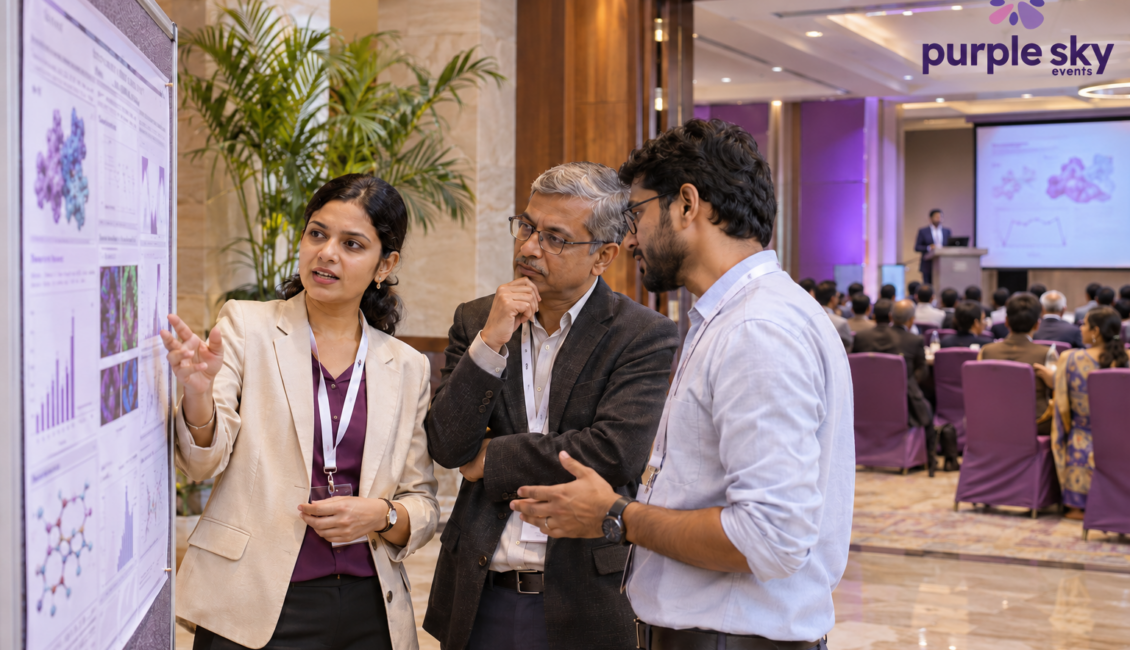
Scientific poster sessions create opportunities for detailed discussion between researchers and delegates. Their effectiveness depends on visibility, access and scheduling.
When planning poster presentations:
- Share approved poster dimensions and display instructions.
- Assign clear poster numbers and locations.
- Allow time for installation and removal.
- Provide suitable lighting and readable signage.
- Keep aisles clear for comfortable circulation.
- Schedule dedicated periods when authors can be present.
Avoid placing posters in narrow corridors or treating them as decoration outside the main programme.
If judging or awards are planned, the scientific committee should define the criteria and evaluation process. The event team can coordinate the space, timing and movement around those decisions.
6. Make Registration and Delegate Management Straightforward
Conference delegate management covers communication, registration, arrival assistance, navigation and support throughout the event.
Before the conference, participants should receive clear information about:
- Venue address and reporting time
- Registration requirements
- Programme access
- Transport arrangements, where applicable
- Accommodation details
- Presentation or poster instructions
- A contact point for assistance
On-site, use clearly labelled registration counters and a separate help desk for queries that take longer to resolve.
Badge categories, printed materials and registration staffing should reflect the expected arrival pattern. A concentrated morning rush needs a different arrangement from staggered arrivals across several days.
7. Build a Realistic Conference Budget
Scientific conference costs depend on the programme, delegate count, venue, duration and accommodation requirements.
Your conference budget should account for:
- Venue hire and breakout rooms
- Catering and refreshments
- Stage, sound and presentation equipment
- Registration systems and staffing
- Poster boards and exhibition infrastructure
- Conference branding and signage
- Speaker travel and accommodation
- Local transfers and hospitality
- Recording or hybrid production
- Contingency requirements
Compare proposals using the same scope. Check what is included, excluded or charged separately, along with applicable taxes and change conditions.
A lower quotation may cover fewer operational responsibilities, so the total alone does not provide a complete comparison.
8. Connect the Programme with Hospitality and Logistics
Scientific conference logistics must follow the approved agenda.
Speaker arrivals should leave sufficient time for preparation. Transport schedules should account for reporting times and local travel conditions. Catering breaks should fit the session structure and available service space.
Pay particular attention to:
- Arrival and departure coordination
- Hotel room allocations
- Dietary and accessibility requirements
- Speaker assistance
- Transfers between hotels and venues
- Clear directions between conference areas
- Help-desk availability
These details help participants spend more time engaging with the conference and less time resolving practical difficulties.
9. Run a Final Readiness Check
Before delegates arrive, review the complete event journey.
Walk through registration, hall access, presentation setup, poster areas, catering spaces and departure arrangements. Confirm who is responsible for each operational area and how issues will be escalated.
The final check should cover:
- Room layouts and signage
- Approved session schedules
- Presentation files and backup equipment
- Speaker and moderator reporting
- Registration materials
- Transport and hospitality contacts
- Technical rehearsals
- Contingency communication
For conferences with several parallel tracks, maintain room-specific schedules alongside the central event plan.
Plan Your Scientific Conference with Purple Sky Events
A well-organised scientific conference gives research, discussion and professional connections the attention they deserve.
Purple Sky Events provides scientific conference management in Pune, with support for venue coordination, registration, audiovisual production, poster areas, hospitality, logistics and on-ground execution, according to the agreed scope.
Whether you are preparing a research symposium, academic gathering or multi-session conference, book an appointment with Purple Sky Events today to discuss your programme and planning requirements.
Frequently Asked Questions
1. What does scientific conference planning include?
Scientific conference planning includes venue selection, registration, presentation systems, speaker logistics, poster displays, hospitality and event-day coordination. Academic content, abstract evaluation and scientific decisions usually remain with the organising committee.
2. How do you choose a scientific conference venue in Pune?
Choose a venue based on delegate numbers, session formats, breakout rooms, poster space, audiovisual facilities, accessibility and accommodation needs. Evaluate travel convenience and movement between conference areas before confirming the venue.
3. How early should scientific conference planning begin?
Begin once tentative dates, delegate numbers, programme requirements and a working budget are available. Conferences involving multiple halls, outstation speakers, exhibitions or hybrid participation require more preparation than smaller seminars.
4. How should poster sessions be organised at a scientific conference?
Provide clear submission and display instructions, numbered poster locations, suitable lighting and dedicated discussion periods. Allow enough installation time and circulation space, and coordinate any judging arrangements with the scientific committee.